
RFID Card Frequencies Explained: LF vs HF vs UHF and How to Choose
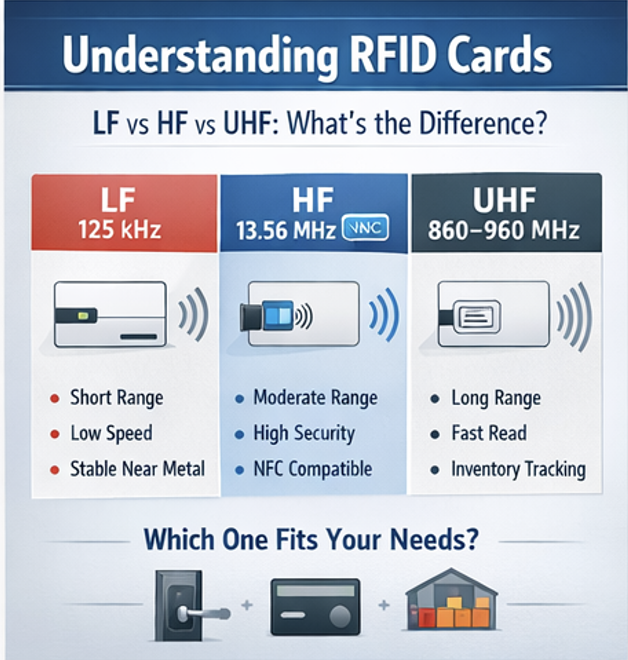
RFID card frequencies are one of the most important factors to understand when choosing an RFID system. If you work with RFID cards, you have probably seen terms like LF, HF, and UHF. These terms refer to the different RFID card frequencies used in RFID technology.
While they may sound technical, the concept is actually quite simple. Each frequency type offers different advantages depending on the reading range, environment, and application.
Understanding RFID card frequencies will help you choose the most suitable solution for your system.
Low Frequency (LF) RFID
Frequency: 125 kHz
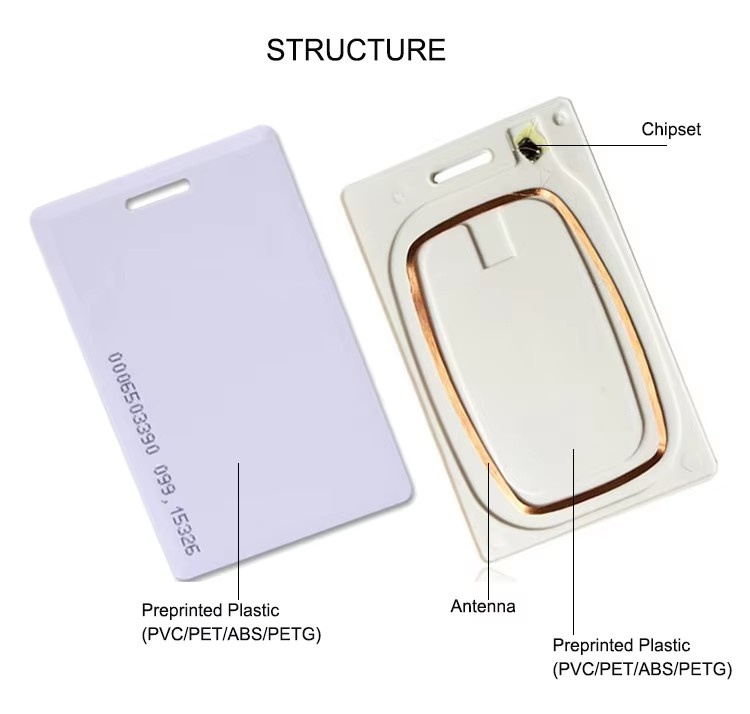
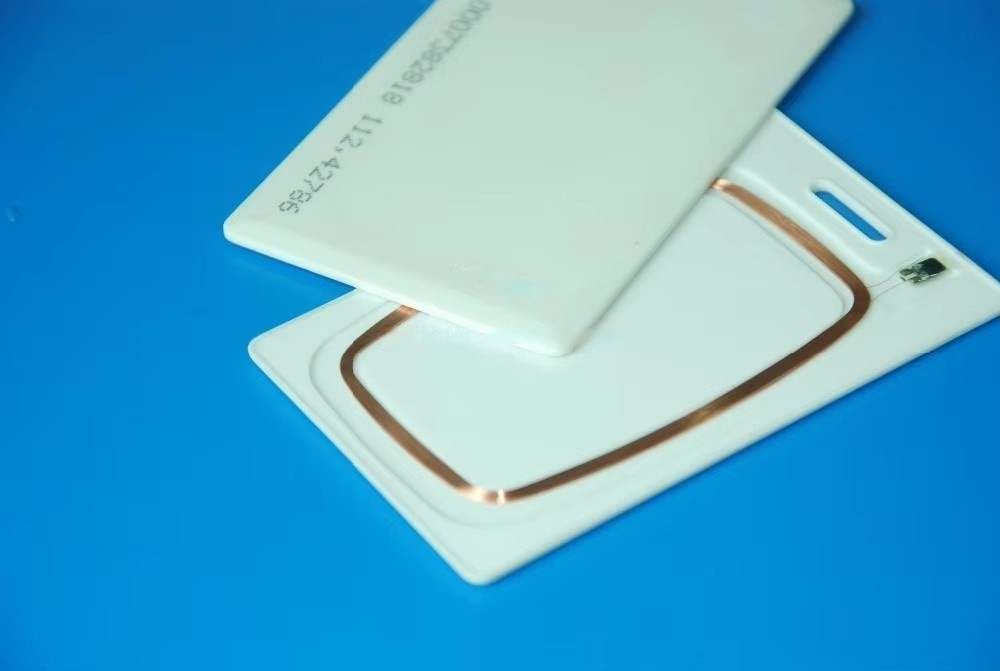
Low Frequency is one of the earliest RFID card frequencies used in access control and identification systems. LF RFID is known for its strong stability and reliability, especially in environments where water or metal might interfere with other RFID technologies.
One advantage of LF systems is that they are less sensitive to environmental interference. This makes them useful in industrial or outdoor environments.
However, LF RFID cards have a short reading distance, usually only a few centimeters, and they support lower data transfer speeds compared with other RFID card frequencies.
Common applications include:
-
Basic access control systems
-
Employee ID cards
-
Animal identification
-
Attendance tracking systems
LF RFID is often chosen when simplicity, durability, and cost-effectiveness are the main priorities.
High Frequency (HF) RFID
Frequency: 13.56 MHz
High Frequency is currently one of the most widely used RFID card frequencies in modern systems. HF RFID also includes NFC (Near Field Communication) technology, which allows RFID cards to interact with smartphones and other mobile devices.
Compared with LF RFID, HF technology offers better security features and encryption, making it suitable for applications that require secure data exchange.
HF RFID cards are commonly used in systems where user interaction is required, such as:
-
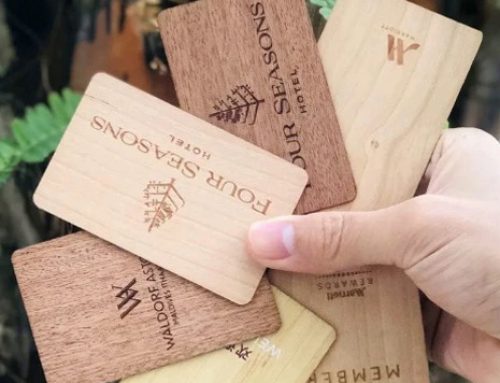
Hotel key cards
-
Contactless payment cards
-
Public transportation tickets
-
Library systems
-
Membership and loyalty cards
Because of its balance between security, convenience, and compatibility, HF is often the preferred option for many modern RFID solutions.
UHF RFID
Frequency: 860–960 MHz
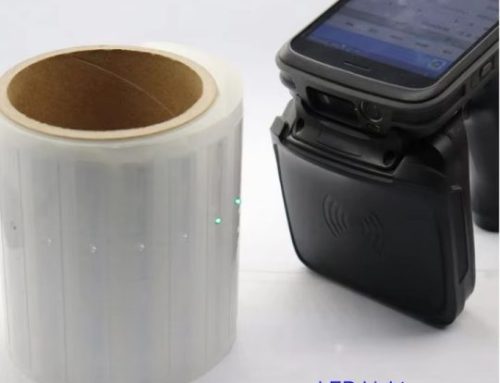
Among all RFID card frequencies, UHF RFID provides the longest reading distance and fastest scanning capability. UHF systems can read tags from several meters away and can scan multiple RFID tags simultaneously.
This ability makes UHF extremely efficient for large-scale tracking and automation.
Typical applications include:
-
Warehouse inventory management
-
Logistics and supply chain tracking
-
Asset tracking systems
-
Retail inventory control
However, UHF RFID signals can be more sensitive to environmental conditions, especially metal surfaces and liquids. Because of this, UHF deployments often require careful planning, proper tag placement, and system testing.
How to Choose Between RFID Card Frequencies
Choosing between RFID card frequencies depends on three main factors: reading range, environment, and application requirements.
Reading Range
Different RFID card frequencies provide different reading distances.
-
LF: very short range
-
HF: short-range interaction
-
UHF: long-range scanning
Environment
Environmental conditions can influence which RFID card frequencies work best.
-
LF performs well near metal and water
-
HF works well in most indoor environments
-
UHF requires careful system design
Application
Each RFID frequency is suited to different types of applications.
-
HF RFID: secure, close-range interactions
-
UHF RFID: large-scale tracking and logistics
-
LF RFID: simple identification and access control
Final Thoughts
Understanding RFID card frequencies is essential when designing or choosing an RFID system. LF, HF, and UHF technologies each have their own strengths and limitations.
-
Need secure and interactive card use? Choose HF RFID
-
Need long-distance scanning and bulk tracking? Choose UHF RFID
-
Need simple and stable identification? Choose LF RFID
There is no universal “best” option. The best choice always depends on how and where the RFID system will be used.
By understanding RFID card frequencies, businesses can build RFID solutions that are more reliable, efficient, and suitable for real-world applications.
If you want to learn more about it, you can read our related blog: https://glomaxrfid.com/uncategorized/choose-rfid-card-manufacturer/


Leave A Comment