
RFID card encoding is the invisible engine that powers modern access control systems, turning blank plastic into secure keys. RFID cards may look incredibly simple from the outside. They can easily be printed with a sleek company logo, an employee name, a member photo, a luxury hotel design, or vibrant brand colors.
Once the visual design is finished, many people assume the card is instantly ready to use. But in almost all professional applications, beautiful printing is simply not enough.
An RFID card must undergo a precise data configuration process before it can successfully talk to your security infrastructure. If you skip this critical step, your security readers will completely ignore the card, no matter how great your logo looks.
Table of Contents
What is RFID Card Encoding?
To understand why this process is so critical, we have to look past the surface of the plastic.
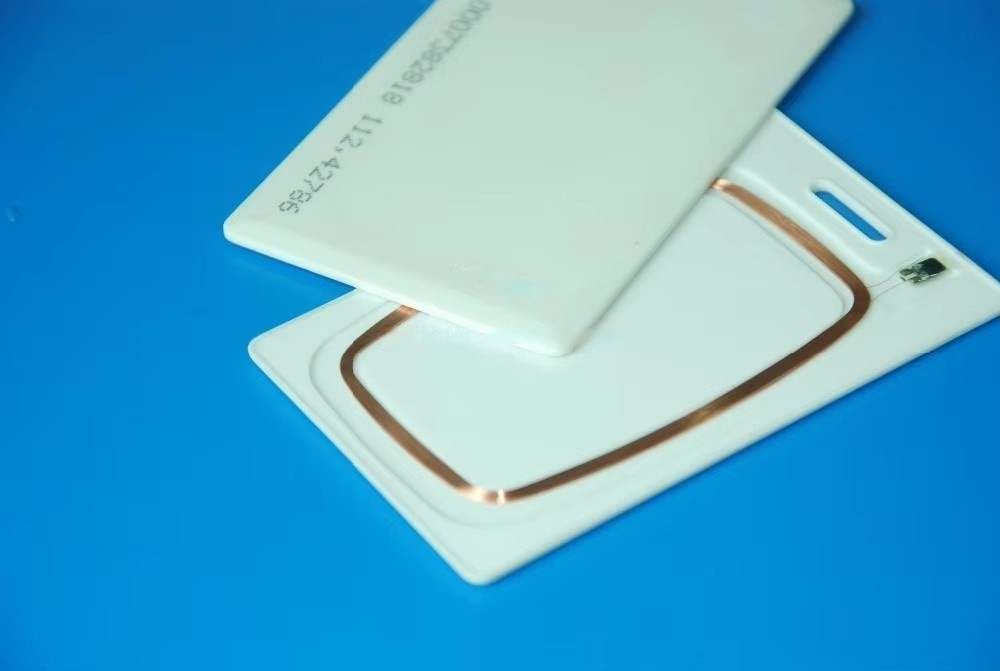
RFID card encoding means electronically writing specific digital data into the tiny microchip embedded inside the card. This internal chip contains a miniature radio antenna that transmits data to a compatible reader when brought within range.
Without this encoded data, the card is essentially “blank” to your system. It is like trying to log into a secure website with an empty username and password field; the system has no data to verify, so it denies access.
> Image Alt Text: A technician performing RFID card encoding for an office access control system.
Printing vs. Encoding: The Visible and Invisible Worlds
It is a common mistake to confuse card printing with card programming. While they often happen inside the same specialized machine, they serve completely different functions.
The Visible Surface: Printing
Printing is purely aesthetic and informational for human eyes. It includes your custom artwork, background colors, employee text, barcodes, or static QR codes.
Printing can be applied via direct-to-card thermal printers or high-definition retransfer technology. However, a beautifully printed card without internal data is completely useless at an electronic turnstile.
The Invisible Core: Encoding
Encoding is purely functional and designed for machine communication. This process uses electromagnetic fields to open up the memory sectors of the internal chip and write unique string values, encryption keys, or facility codes.
To learn more about the strict physics governing these wireless signals, you can review the international ISO/IEC 14443 standards which regulate how smart cards communicate data securely.
5 Vital Types of Data Used in RFID Card Encoding
The specific datasets written during RFID card encoding depend entirely on your specific hardware environment.
Here are the 5 most common types of data formats written onto smart cards today:
| Data Type | Primary Application | How It Works |
| Unique Identifier (UID) | Basic Security & Time Tracking | A fixed, factory-set number that maps directly to a user profile in a central database. |
| Facility & Site Codes | Corporate Campus Access | A specific regional code that ensures cards from Company A won’t accidentally unlock doors at Company B. |
| Cryptographic Keys | High-Security Government Facilities | Encrypted tokens that prevent malicious actors from cloning or skimming the card data. |
| Biometric & PIN Data | Multi-Factor Authentication (MFA) | Storing a template of a fingerprint directly on the card for local matching at a secure terminal. |
| Stored Value / Balance | Public Transit & Closed-Loop Cafeterias | Digital cash balances written and updated directly on the card chip in real-time. |
Why Correct Encoding Prevents System Failures
Have you ever swiped a brand-new badge only to hear an error beep from the door reader? If a card is not encoded correctly, the reader will fail to recognize it.
This does not mean your physical card is broken or defective. More often than not, it simply means the internal chip was formatted using a layout or protocol your software doesn’t recognize.
For instance, a hotel key card, a corporate office badge, and a gym membership card might look completely identical on the outside. They might even use the exact same internal chip type. However, if the hotel card lacks the specific cryptographic handshake required by an office building’s security system, the door will stay locked.
If you are planning an upgrade to your existing infrastructure, be sure to check out our comprehensive internal guide on Upgrading Your Access Control Hardware to avoid common system integration pitfalls.
The Ultimate Pre-Ordering Checklist for Businesses
To avoid costly deployment delays and ordering mistakes, your management team must answer a few technical questions before signing off on a production batch.
-
What software system will the cards integrate with? (e.g., Lenel, Software House, Amag, or a proprietary hotel system).
-
What frequency does your reader infrastructure support? Low Frequency (125 kHz) or High Frequency (13.56 MHz)?
-
What exact chip type is required? (e.g., MIFARE Classic, DESFire EV3, HID iCLASS, or Seos).
-
Does your system require pre-programmed sequential numbering?
-
Should your supplier perform the RFID card encoding before delivery, or will your team program them on-site?
Pro Tip: If your security vendor allows it, ordering pre-encoded cards directly from an experienced supplier saves hundreds of administrative hours during a large-scale system rollout.
Final Thoughts
Modern proximity cards are far more than just printed pieces of shiny plastic. They are sophisticated, highly secure components of an integrated network ecosystem.
While your external card design matters because it represents your corporate brand to the world, your internal RFID card encoding matters because it actually makes the card work.
Before placing your next bulk order, make sure you have confirmed both sides of the equation: How should the card look on the outside, and exactly what must the internal chip do on the inside?




Leave A Comment