
7 Ways RFID Transforms Smart Factory Inventory Management
RFID for smart factory inventory management is reshaping how manufacturers operate in the era of Industry 4.0. As factories embrace automation, data integration, and IoT connectivity, RFID stands out as a powerful enabler of real-time visibility, accuracy, and efficiency across production and warehouse environments.
In this article, we’ll explore seven ways RFID technology empowers smart factories to optimize their inventory management systems and achieve next-level operational excellence.
1. Real-Time Inventory Tracking

RFID Inventory Management
In a smart factory, timing is everything. RFID technology enables real-time tracking of raw materials, semi-finished goods, and final products. Each item tagged with an RFID chip can be automatically scanned as it moves through the supply chain—no manual barcode scanning required.
This live visibility ensures that production lines never run short of materials and that logistics teams always know the precise stock level of every component.
📘 Learn more about RFID tags for asset tracking.
2. Seamless Automation and Material Flow
When integrated with automated guided vehicles (AGVs), conveyors, or robotic systems, RFID technology allows materials to move autonomously through production lines. Each tagged item communicates directly with machines and management systems, enabling data-driven decision-making without human input.
This synergy between RFID and industrial IoT transforms ordinary manufacturing into a truly self-regulating ecosystem—a core feature of modern smart factories.
3. Enhanced Accuracy and Reduced Human Error
Traditional barcode systems rely heavily on manual scanning, which can lead to errors and inefficiencies. RFID readers, on the other hand, can identify hundreds of tags per second, even without direct line-of-sight.
This means instant, error-free data capture and automatic synchronization with ERP systems, resulting in 99%+ inventory accuracy and smoother workflows.
4. Tool and Equipment Tracking

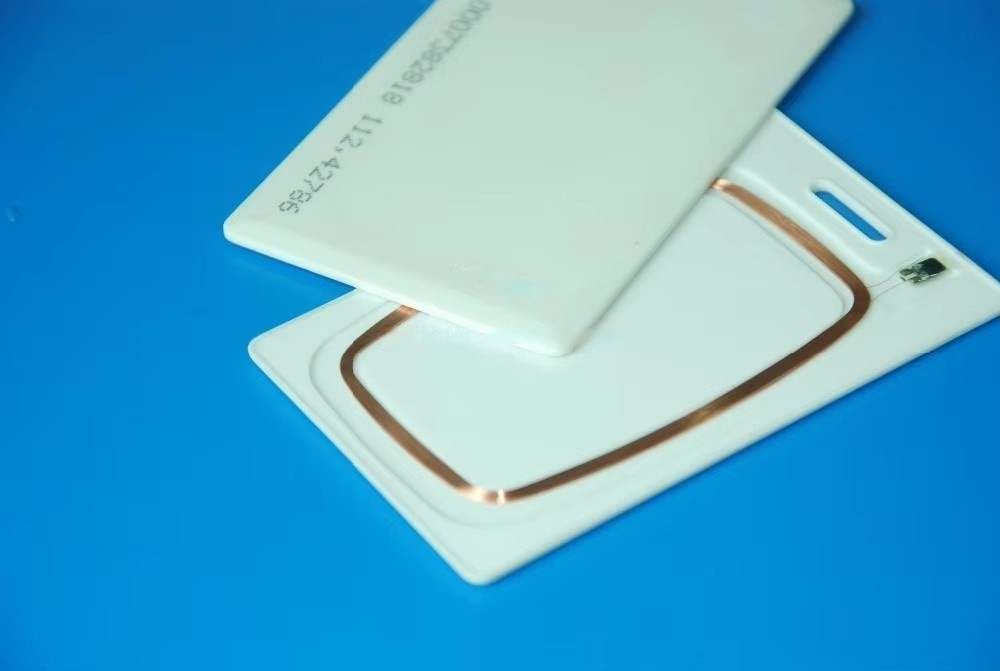
RFID technology for smart factory inventory management system
RFID tags can also be attached to valuable tools, molds, and equipment, allowing factories to monitor usage, location, and maintenance schedules automatically.
This not only reduces the risk of misplaced items but also extends the lifespan of costly assets. Managers can quickly locate critical tools during production surges, ensuring uninterrupted operations.
5. Quality Control and Traceability
In high-precision industries—like electronics, automotive, or pharmaceuticals—traceability is essential. By tagging products and components at every production stage, RFID technology enables manufacturers to track their complete journey from raw material to final assembly.
In the event of a defect or recall, RFID provides instant access to batch details and supplier data, simplifying compliance with quality standards such as ISO 9001 or GS1’s RFID identification standards.
6. Faster Stock Audits and Warehouse Optimization
RFID drastically shortens the time required for cycle counts and stock audits. Instead of manually scanning each barcode, workers can simply walk through the warehouse with a handheld RFID reader and instantly capture thousands of tag readings.
With improved visibility, warehouse layouts can be optimized for efficiency, reducing unnecessary movements and improving order fulfillment times. This directly enhances both productivity and profitability.
7. Improved Safety and Workforce Management
RFID-enabled ID cards and wearables help track employee movement in sensitive or restricted areas. In case of emergencies, supervisors can quickly locate staff and ensure everyone’s safety.
Additionally, RFID can monitor access control, preventing unauthorized personnel from entering high-risk zones or operating specific machinery.
Case Study: A Mid-Sized Manufacturer’s RFID Transformation
A mid-sized electronics factory recently integrated RFID technology across its production and warehouse systems. Before the upgrade, staff spent hours performing manual counts, and material shortages frequently disrupted production.
After implementing RFID:
-
Inventory accuracy reached 99%.
-
Material flow improved by 40%.
-
Operational costs dropped by 25%.
With RFID readers updating the central system in real time, managers gained complete visibility over their assets and materials—transforming their operation into a data-driven, smart ecosystem.
Conclusion: The Future of Inventory Management Is Smart
RFID technology isn’t just another tracking tool—it’s a foundation for the future of smart manufacturing. By enhancing visibility, improving accuracy, and enabling full automation, RFID empowers factories to make faster, smarter, and more sustainable decisions.
As Industry 4.0 continues to evolve, adopting RFID technology for smart factory inventory management will no longer be optional—it will be essential for staying competitive in a rapidly digitalizing world.
To learn more about RFID products and implementation strategies, visit Siemens Smart Factory Overview or consult trusted industrial solution providers.





Leave A Comment